- Get Free Quotes
- +91 99209 06048
- +91 22675 21290
- [email protected]

A Complete Guide to Flanges and Fittings – Choosing the Right One for Your Needs
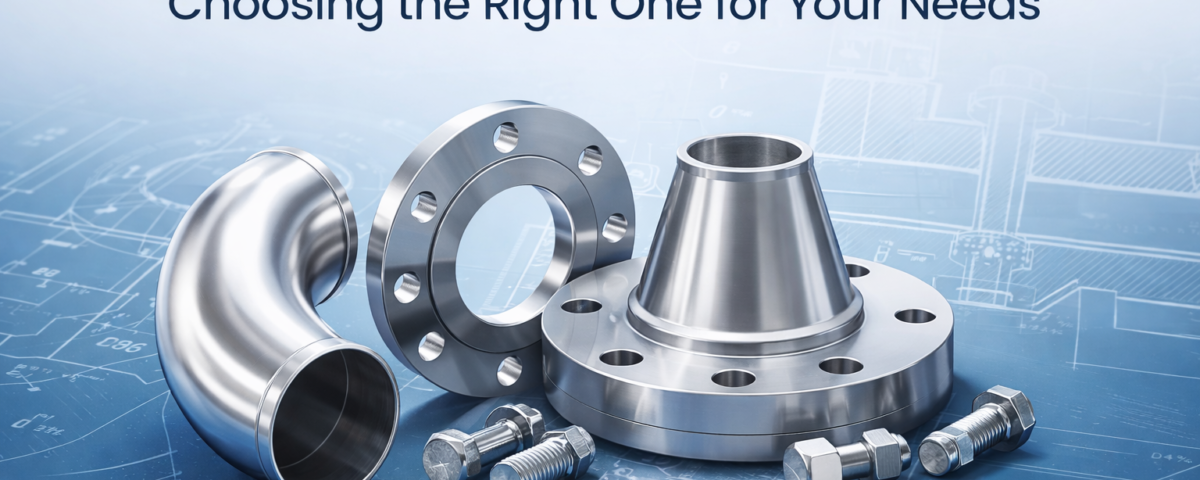
Piping systems are the backbone of many industries from oil and gas to water treatment, construction, and manufacturing. But the strength and efficiency of a pipeline do not depend on pipes alone. Flanges and pipe fittings play a crucial role in connecting, controlling, and directing the flow of fluids safely.
Choosing the correct components is essential for ensuring durability, safety, and long-term performance. Whether you are an engineer, contractor, or procurement professional looking for steel pipe fitting in India or working with a trusted steel manufacturer agency in Mumbai, understanding the fundamentals of flanges and fittings can help you make informed decisions.
This guide explains what flanges and fittings are, their types, materials, standards, and how to select the right option for your specific project.
Understanding Pipe Fittings
Pipe fittings are components used to connect pipes, change direction, regulate flow, or alter pipe diameter in a piping system. They ensure the system works efficiently and safely across various industrial applications.
According to the American Society of Mechanical Engineers (ASME), pipe fittings must meet specific design and material standards to ensure compatibility and safety in pressure piping systems.
Common Functions of Pipe Fittings
Pipe fittings serve several important purposes:
- Connecting pipes together
- Changing flow direction
- Controlling fluid flow
- Reducing or increasing pipe diameter
- Branching pipelines
Without these components, complex piping systems simply cannot function effectively.
Common Types of Pipe Fittings
Different industrial applications require different fittings. Below are some of the most commonly used types.
1. Elbows
Elbows change the direction of fluid flow in pipelines. The most common angles are 45° and 90°.
They are widely used in industries like chemical processing, power plants, and water distribution systems.
2. Tees
A tee fitting allows fluid flow to branch into two directions. It has three openings: one inlet and two outlets.
Tees are commonly used in distribution pipelines and branching systems.
3. Reducers
Reducers connect pipes of different diameters. They help maintain proper flow velocity and pressure.
Two main types exist:
- Concentric reducers – aligned centerlines
- Eccentric reducers – offset centerlines
4. Couplings
Couplings join two pipes together. They are commonly used for repair or extension of pipelines.
5. Caps
Caps seal the end of a pipeline, preventing leakage and protecting the system from contaminants.
What Are Pipe Flanges?
Flanges are mechanical connectors used to join pipes, valves, pumps, and other equipment. Unlike welded joints, flanged connections allow easy disassembly for maintenance, inspection, or system modification.
Flanges are typically bolted together with a gasket placed between them to create a leak-proof seal.
The American Petroleum Institute (API) and ASME provide widely recognized standards governing flange design and pressure ratings.
Common Types of Flanges
1. Weld Neck Flanges
Weld neck flanges feature a long tapered hub that provides strong reinforcement. They are ideal for high-pressure and high-temperature applications.
Industries such as oil refineries and power plants commonly use them.
2. Slip-On Flanges
Slip-on flanges slide over the pipe before welding. They are easier to install compared to weld neck flanges but slightly less strong.
They are often used in low to moderate pressure systems.
3. Blind Flanges
Blind flanges seal the end of piping systems or pressure vessel openings. They allow easy access for future expansion or maintenance.
4. Socket Weld Flanges
Socket weld flanges are designed for small pipe diameters. The pipe inserts into the flange socket before welding, ensuring alignment.
5. Threaded Flanges
Threaded flanges connect pipes without welding. They are typically used in low-pressure applications where welding is not practical.
Materials Used in Flanges and Pipe Fittings
The material selection significantly affects the performance, corrosion resistance, and lifespan of piping components.
Carbon Steel
Carbon steel is one of the most widely used materials due to its strength and affordability.
It is commonly used in structural and industrial piping systems.
Stainless Steel
Stainless steel provides excellent corrosion resistance and durability. Industries such as food processing, pharmaceuticals, and chemical manufacturing often rely on stainless steel components.
Alloy Steel
Alloy steel fittings and flanges contain additional elements such as chromium or molybdenum, which enhance strength and resistance to high temperatures.
Duplex and Super Duplex Steel
These materials provide superior corrosion resistance and are widely used in offshore and marine environments.
Industry Standards for Flanges and Fittings
Following recognized standards ensures safety, compatibility, and performance.
Some important standards include:
- ASME B16.5 – Pipe flanges and flanged fittings
- ASME B16.9 – Factory-made wrought butt-welding fittings
- ASME B16.11 – Forged fittings, socket-welding, and threaded
- ASTM standards – Material specifications
These standards define dimensions, materials, pressure ratings, and testing procedures.
Reliable suppliers and manufacturers must comply with these standards to ensure product quality.
How to Choose the Right Flange or Fitting
Selecting the right component depends on several important factors.
1. Operating Pressure and Temperature
High-pressure systems require stronger fittings such as butt weld fittings and weld neck flanges.
Lower-pressure systems may use slip-on or threaded connections.
2. Pipe Size
Small-diameter pipelines often use socket weld fittings, while large pipelines usually require butt weld fittings.
3. Fluid Type
Corrosive fluids require corrosion-resistant materials like stainless steel or duplex steel.
4. Maintenance Requirements
Flanged connections make maintenance easier because technicians can disassemble them without cutting pipes.
5. Installation Environment
Offshore, chemical, and high-temperature environments demand specialized materials and certified manufacturing processes.
Importance of Choosing a Reliable Supplier
Even the best engineering design can fail if the materials are poor quality. That is why sourcing from a reliable supplier is critical.
Many industries prefer working with established suppliers of steel pipe fitting in India, especially those connected with a trusted steel manufacturer agency in Mumbai.
Mumbai has long been a major hub for steel trading and manufacturing in India. The city hosts numerous exporters, distributors, and manufacturers supplying piping components to domestic and international markets.
A reliable supplier ensures:
- Certified materials
- Compliance with international standards
- Timely delivery
- Technical support
- Quality assurance documentation
Maintenance Tips for Flanges and Fittings
Proper maintenance extends the lifespan of piping systems.
Here are some practical tips:
- Regularly inspect bolts and gaskets in flange connections
- Check for corrosion or leaks
- Replace worn-out gaskets promptly
- Ensure correct torque during installation
- Conduct periodic pressure testing
Preventive maintenance helps avoid costly downtime and unexpected failures.
Future Trends in the Piping Industry
The piping industry continues to evolve with advancements in materials, manufacturing, and quality control.
Some key trends include:
- Increased use of corrosion-resistant alloys
- Automation in pipe fitting manufacturing
- Advanced non-destructive testing methods
- Digital supply chain tracking
As industries demand higher reliability and efficiency, the role of certified flanges and fittings becomes even more important.
Frequently Asked Questions (FAQs)
1. What is the difference between pipe fittings and flanges?
Pipe fittings connect pipes or change the direction and flow of pipelines. Flanges connect pipes to equipment or other pipes using bolted joints and gaskets.
2. Which flange is best for high-pressure pipelines?
Weld neck flanges are typically preferred for high-pressure and high-temperature systems because of their strong structural design.
3. Why are stainless steel fittings widely used?
Stainless steel fittings resist corrosion, offer long service life, and perform well in demanding environments such as chemical processing and food industries.
4. Where can I find reliable steel pipe fittings in India?
India has several industrial hubs for piping components. Many contractors source products through experienced suppliers or a steel manufacturer agency in Mumbai known for quality and global exports.
5. What standards should flanges and fittings follow?
Most industrial piping components follow ASME, ASTM, and API standards to ensure safety, compatibility, and durability.
Conclusion
Flanges and pipe fittings are essential components that ensure piping systems operate safely and efficiently. Choosing the right type, material, and standard can significantly impact the performance and lifespan of your pipeline.
From elbows and reducers to weld neck and slip-on flanges, each component has a specific role in maintaining flow control and structural integrity.
When sourcing materials, working with a reliable supplier of steel pipe fitting in India or a trusted steel manufacturer agency in Mumbai ensures compliance with international standards and long-term reliability.
By understanding the fundamentals outlined in this guide, engineers and project managers can confidently select the right flanges and fittings for their industrial needs.